
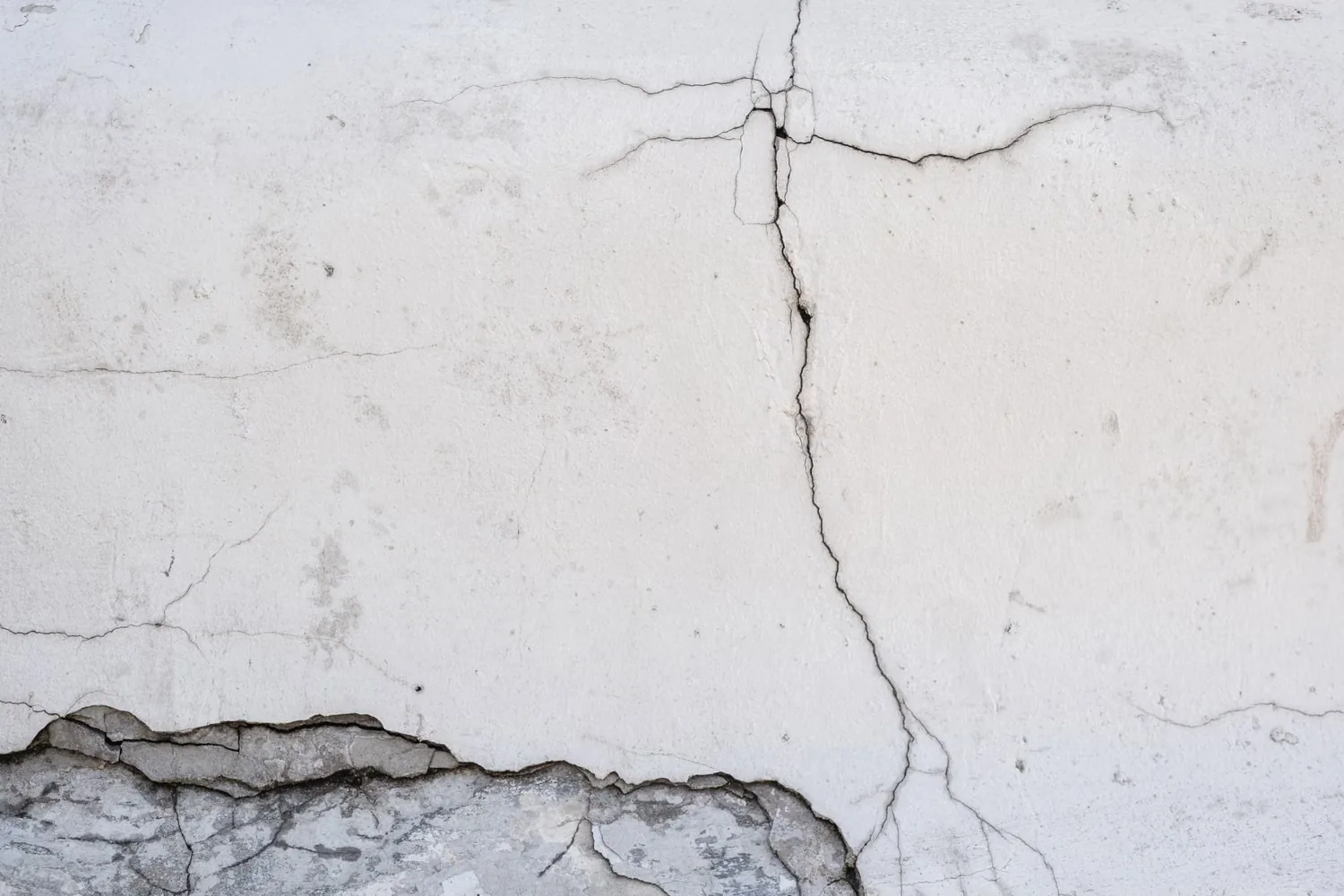
Cracks are the most common stucco issue in the British Columbia — and the most misunderstood. Some are cosmetic footnotes from normal curing. Others are active water paths or early warnings of movement. Here is how to read what your wall is showing you.
The Five Causes
1. Curing shrinkage. Cement stucco shrinks as it cures, and fine hairline cracks are a normal result. They are stable, cosmetic, and simply need sealing before freeze–thaw cycles widen them.
2. Settlement. Buildings settle, especially in their first years. Settlement cracks often run diagonally from the corners of windows and doors, where stress concentrates.
3. Thermal movement. British Columbia walls expand in summer and contract in winter. Where movement has nowhere to go — long uninterrupted walls, missing control joints — the wall relieves the stress by cracking.
4. Moisture and freeze–thaw. Water in a crack freezes, expands, and widens it. This is why a hairline ignored in September can be a real crack by April.
5. Workmanship. Coats applied too thin, curing rushed, or control joints omitted — original workmanship issues produce cracking patterns that repeat across elevations.
Reading the Pattern
Hairlines — fine, stable, cosmetic. Seal them. Spider or map cracking — networks of fine lines, usually from rapid drying or a weak finish coat; often solved with repair plus refinishing. Diagonal cracks from openings — stress cracks; repair properly and assess whether movement accommodation is needed. Horizontal lines — often mark framing transitions; worth a professional look. Wide, growing or displaced cracks — these suggest ongoing movement; assess the cause before repairing the surface. Cracks with staining below — already admitting water; prioritize these.
What Each Type Needs
Stable hairlines: elastomeric sealing and blending. Working cracks: routing out and flexible repair mortars that move with the wall. Cracks with failed surroundings: cut-out and rebuild. Recurring cracks: discreet control joints that let the building move without re-cracking the surface.
When to Call
Any crack wider than a few millimetres, any crack that grows season over season, any crack with staining — and any crack you are simply unsure about. Assessment is free, and the difference between sealing a hairline and rebuilding a section is usually one phone call made a year earlier.